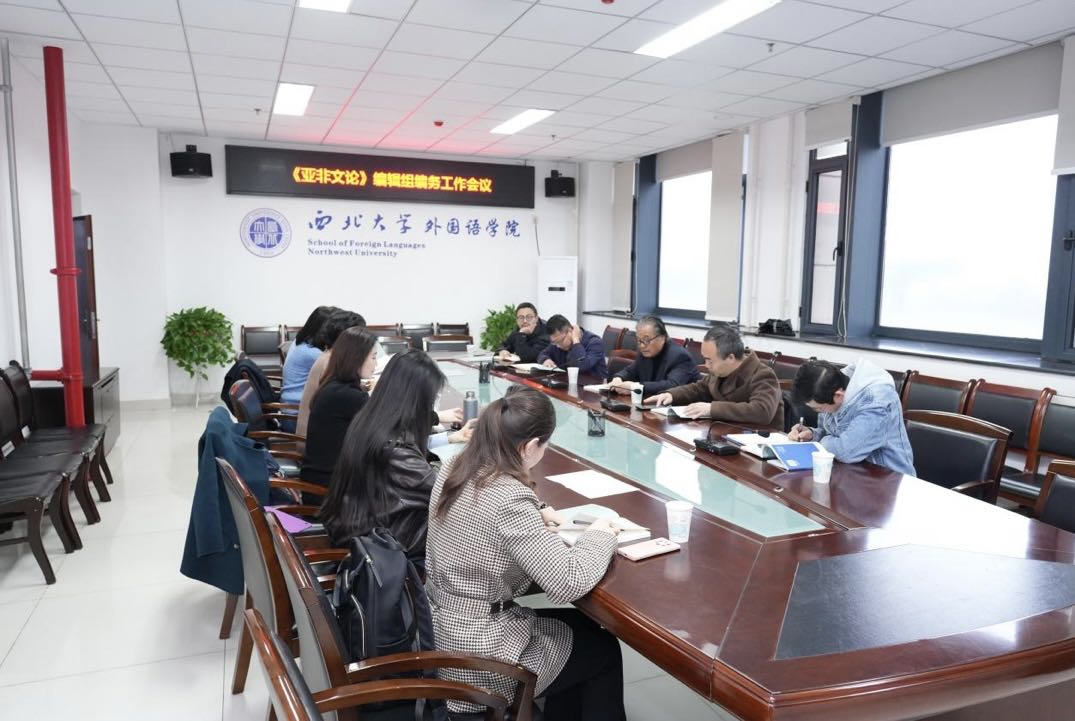
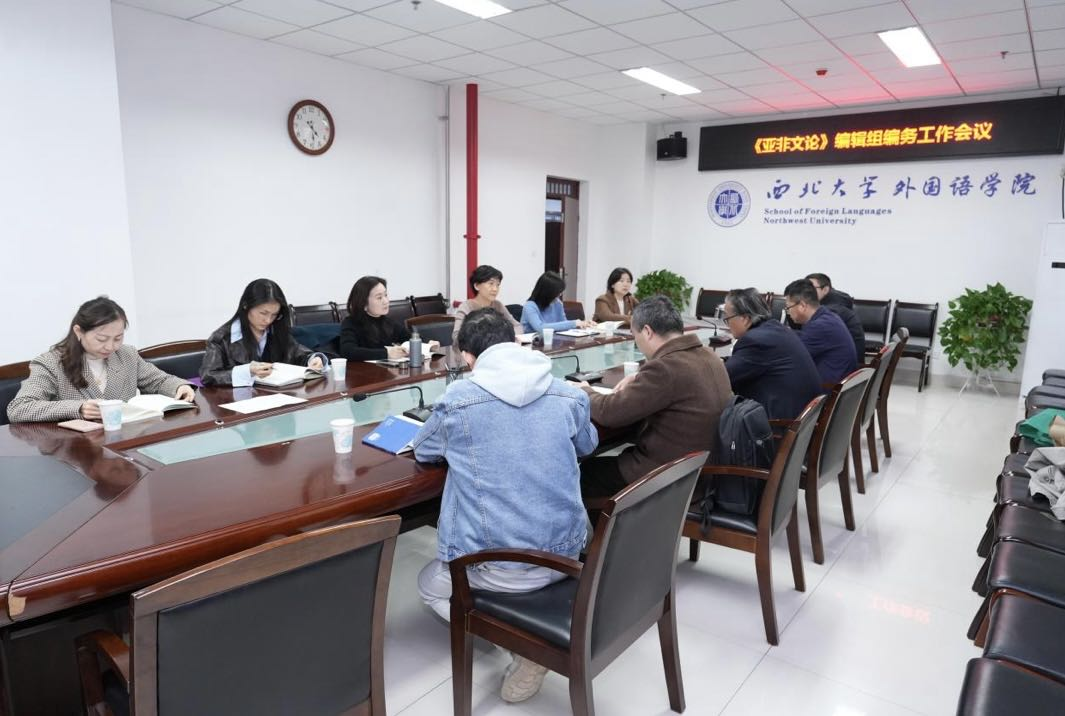
On March 17, the Editorial Team of Asian and African Studies held its 2026 annual editorial work meeting. Professor Wang Xingang, Editor-in-Chief, and Professor Cao Ruonan, Executive Editor-in-Chief, attended the meeting to arrange relevant work, with all members of the editorial team present. The meeting also invited teachers Yan Wei, Ma Feng, Cao Fengyu and Xie Zhibin from peer institutions to provide guidance at the meeting, and conduct exchanges on journal development and journal operation experience.
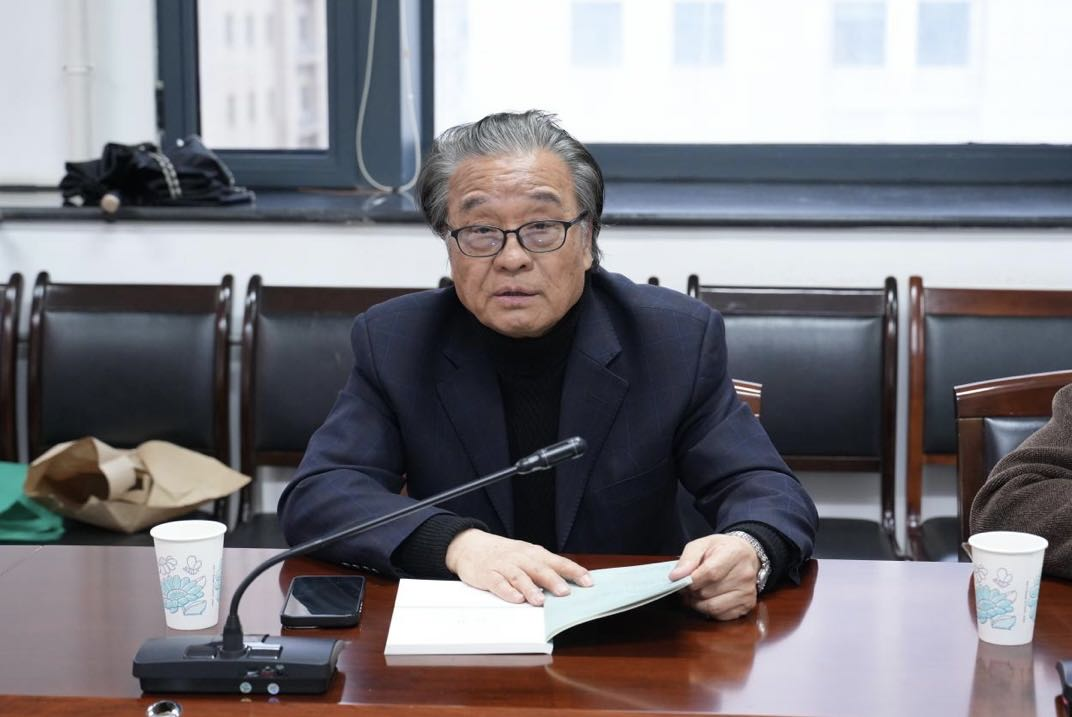
At the meeting, Professor Wang Xingang laid out the key tasks for the journal’s development in this year in light of the actual development of Asian and African Studies. He pointed out that the editorial team must further enhance its political stance, firmly uphold the correct orientation for running the journal, root itself in academic frontiers and disciplinary characteristics, continuously improve the journal’s academic quality, editing quality and social influence, and strive to build Asian and African Studies into a key academic platform for showcasing research results of Asian and African studies and serving the development of disciplinary construction. Professor Cao Ruonan made specific arrangements for the 2026 editorial work, emphasizing that all members of the editorial team must strengthen their sense of responsibility, spirit of collaboration and commitment to excellence, further elevate the standardization and refinement of editorial work, and ensure that all editorial tasks are advanced in an efficient and orderly manner.
During the exchange session, Teachers Yan Wei, Ma Feng, Cao Fengyu and Xie Zhibin from peer institutions shared their experience and practices based on their respective journal operation practices, covering the refinement of journal positioning, development of featured columns, expansion of high-quality manuscript sources, improvement of peer review mechanisms, and cultivation of young authors. The participants held in-depth discussions on the new situation and requirements that current academic journals face, and exchanged views on further improving the journal’s quality and strengthening exchanges and cooperation.
This editorial work meeting has further clarified the objectives, tasks and key directions of the 2026 work of Asian and African Studies, built consensus and boosted confidence. Members of the editorial team stated that they will take this meeting as an opportunity to conscientiously implement the arrangements made at the meeting, continuously improve the level of journal operation, promote high-quality development of Asian and African Studies, and make positive contributions to the disciplinary construction and academic exchanges of the school and the university.
 School Homepage
 中文
中文